
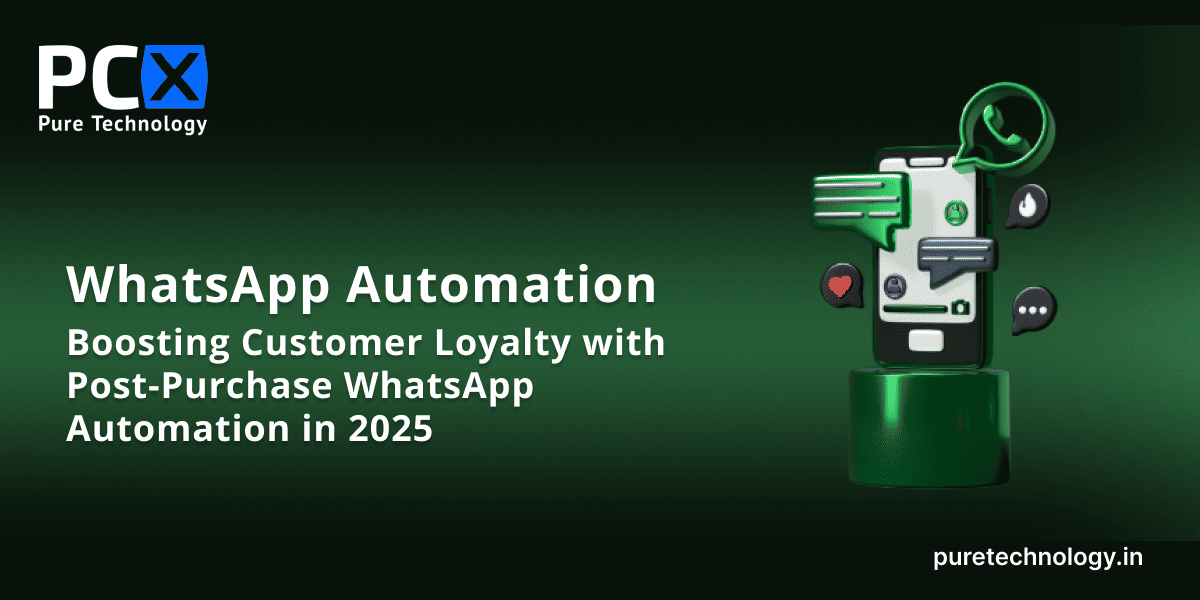
Boosting Customer Loyalty with Post-Purchase WhatsApp Automation in 2025
In today’s digital-first world, customer expectations are higher than ever. If your business still depends on email tickets and long call queues for support, you’re already at a disadvantage. In 2025, innovative brands are transforming post-purchase experiences by automating over 70% of customer support interactions through WhatsApp chatbots. The results? Faster resolutions, stronger customer retention, and significantly reduced support costs.
For B2B industries like eCommerce, SaaS, logistics, and retail tech, the post-purchase stage is a critical moment of truth. It’s where customer experience can either strengthen brand loyalty or lead to churn. Automating support with WhatsApp chatbots not only ensures efficiency but also converts service into a growth and loyalty engine.
Why Post-Purchase Support Drives Profitability
Post-purchase is when customers rely on your brand the most. Whether it’s a delayed delivery, a return request, or confusion about product usage—how quickly and effectively you respond defines trust and loyalty.
Traditional methods like email and phone support often result in:
- Long response times
- Rising operational costs
- Inconsistent communication
- Low CSAT (Customer Satisfaction Scores)
On the other hand, businesses that adopt WhatsApp automation report:
- 30–50% fewer support tickets
- 40% faster resolution time
- 25–35% higher repeat purchase rates
And since WhatsApp already connects 2+ billion users globally, businesses don’t need to convince customers to download a new app. Support becomes instant, familiar, and seamless.
Why WhatsApp is the Future of Post-Purchase Support
WhatsApp is no longer just a personal messaging app—it’s a full-fledged business communication platform. With WhatsApp Business API and Meta’s Cloud API, companies can now leverage:
- Secure, end-to-end encrypted messaging
- Verified business profiles for trust
- Rich interactive formats (buttons, images, carousels)
- Scalable automation and proactive messaging
Unlike traditional live chat, WhatsApp provides persistent conversation threads, allowing customers to pause and resume chats at their convenience. This makes it the ideal channel for post-purchase queries and issue resolution.
Key Use Cases of WhatsApp Automation for Post-Purchase Support
- Order Updates & Notifications
- Send real-time updates such as order confirmations, shipping status, and delivery alerts.
- Benefit: Reduces “Where is my order?” (WISMO) queries that often make up 30% of support requests.
- Send real-time updates such as order confirmations, shipping status, and delivery alerts.
- Returns, Refunds & Exchanges
- Automate return requests and generate instant RMA numbers, shipping labels, and refunds.
- Benefit: Faster processing, reduced workload, and improved NPS scores.
- Automate return requests and generate instant RMA numbers, shipping labels, and refunds.
- Product Usage & Onboarding Assistance
- Deliver tutorials, troubleshooting steps, or setup guides via interactive WhatsApp messages.
- Benefit: Fewer product returns caused by improper use or confusion.
- Deliver tutorials, troubleshooting steps, or setup guides via interactive WhatsApp messages.
- Feedback & Review Collection
- Automatically request reviews, NPS ratings, and feedback after delivery.
- Benefit: Generates real-time insights for product improvements and higher review volumes.
- Automatically request reviews, NPS ratings, and feedback after delivery.
- Upsells & Cross-Sells
- Suggest complementary products, service upgrades, or renewals after successful support interactions.
- Benefit: Turns customer service into a contextual sales channel.
- Suggest complementary products, service upgrades, or renewals after successful support interactions.
How to Implement WhatsApp Chat Automation (Step-by-Step for B2B)
- Map Customer Journeys
- Identify key support touchpoints: shipping, returns, product help, billing inquiries.
- These form the base of your chatbot flows.
- Identify key support touchpoints: shipping, returns, product help, billing inquiries.
- Select a WhatsApp Business Solution Provider (BSP)
- Build & Test Automated Flows
- Create decision-tree paths with human handover options and quick-reply buttons.
- Test for real-world scenarios to ensure smooth support.
- Create decision-tree paths with human handover options and quick-reply buttons.
- Promote Your WhatsApp Channel
- Add your WhatsApp number to order confirmations, websites, thank-you pages, and packaging.
- Use “Click to WhatsApp” ads to increase adoption.
- Add your WhatsApp number to order confirmations, websites, thank-you pages, and packaging.
- Measure & Optimize
- Track KPIs such as First Response Time (FRT), Ticket Deflection, CSAT, and Repeat Purchases.
- Continuously refine chatbot flows based on performance.
- Track KPIs such as First Response Time (FRT), Ticket Deflection, CSAT, and Repeat Purchases.
Real-World Case Study: eCommerce SaaS Platform
A SaaS provider offering eCommerce solutions implemented WhatsApp chatbots for merchant support. Within 3 months:
- Ticket volume reduced by 50%
- CSAT improved by 35%
- Return processing time dropped from 3 days to under 12 hours
They also analyzed chat transcripts to identify common FAQs, which fed into product development—creating a cycle of continuous improvement.
Final Thoughts
In 2025, customer service is no longer about simply answering queries—it’s about delivering intelligent, instant, and personalized experiences on platforms customers already use.
By integrating WhatsApp chat automation into post-purchase support, businesses can:
- Boost operational efficiency
- Reduce churn and returns
- Drive repeat purchases and upsells
- Transform support into a brand differentiator
For forward-looking B2B companies, WhatsApp automation is not just a tool—it’s a competitive advantage.
Call us for a professional consultation









Leave a Reply